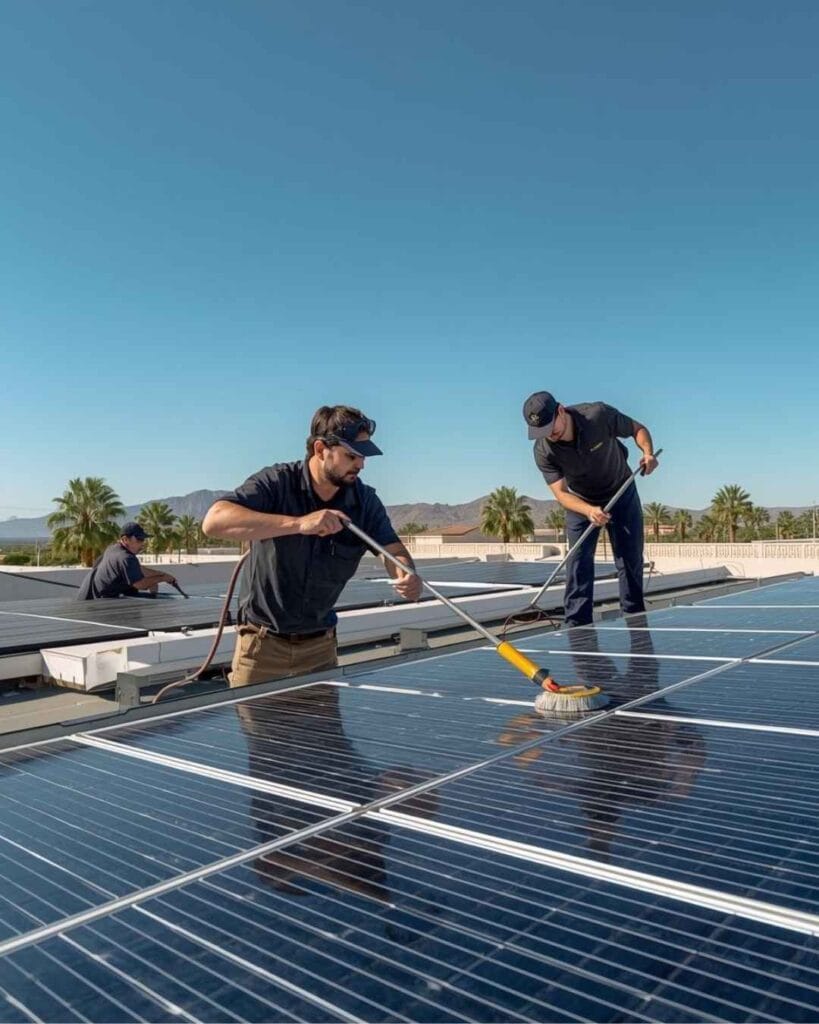

Summer’s Hidden Threat to Your Solar Output
Did you know that even in the sunniest months, your solar panels might be working harder to produce less? Across desert communities like Cathedral City, CA, summer brings extreme heat, dust storms, and dry spells that significantly impact photovoltaic (PV) efficiency. While abundant sunlight offers peak energy potential, built-up grime—dust, pollen, bird droppings, and hard water residue—acts as a barrier, scattering valuable irradiance and reducing power generation. In some cases, energy loss from soiling can reach into double digits, especially when rain is scarce and natural rinsing doesn’t occur.
High temperatures compound the issue. Most solar panels begin to derate when surface temps exceed 77°F, and rooftop units in the Coachella Valley often soar past 140°F during midday. This thermal stress reduces voltage and overall output, even on clean systems. Without consistent maintenance, these seasonal challenges erode your return on investment and limit energy independence.
In this guide, you’ll discover how summer cleaning combats efficiency loss, why DIY methods often fall short, and how strategic care can maximize your system’s performance. Learn practical steps to protect your investment and keep your panels generating strong, reliable power all season long.
How Summer Buildup Slows Your Solar Output
Summer’s intense sunlight should mean maximum energy production—but dust, heat, and debris often undermine performance when you need it most. In arid regions like Cathedral City, CA, seasonal conditions create a triple threat to solar efficiency. Dust storms and dry winds deposit fine particulates on panel surfaces, forming a persistent film that blocks solar irradiance. Even a thin layer of soiling can reduce light absorption, decreasing DC output just as energy demand spikes due to cooling loads.
Heat further reduces efficiency through thermal derating—a known effect where panel performance declines as temperatures rise above 77°F. When rooftop surfaces exceed 140°F, voltage drops and energy yield follows. This means your system may generate less power at noon, even under full sun. Pollen, bird droppings, and airborne grime worsen the issue by creating localized shading, which can disrupt entire string inverter arrays.
Without regular intervention, these factors combine to suppress production during peak solar hours. To counteract this:
- Clean panels every 4–6 weeks using deionized water to prevent mineral deposits
- Inspect for obstructions like leaves, dust buildup, or residue
- Monitor daily kWh output through your inverter’s app to detect performance dips
- Avoid midday cleaning to prevent thermal shock from cool water on hot glass
Proactive maintenance ensures your system operates efficiently despite summer’s harsh conditions. In desert climates, consistent care isn’t just about cleanliness—it’s about maximizing energy harvest and protecting your investment all season long.
Step-by-Step Guide to Cleaning Your Solar Panels This Summer
Maximizing solar ROI starts with a simple truth: clean panels generate more power. In desert climates like Cathedral City, CA, summer brings intense sun but also thick layers of dust, pollen, and hard water residue that block irradiance and reduce photovoltaic efficiency. Follow this proven step-by-step process to safely and effectively clean your solar panels for peak performance.
Inspect Panels Early in the Morning
Look for visible grime, bird droppings, or debris. Cleaning should always be done when panels are cool to prevent thermal shock from water application.Turn Off the System (If Required)
Consult your inverter manual—some setups require disabling the system before cleaning, especially for rooftop arrays.Rinse Lightly with Purified Water
Use a garden hose with a soft spray nozzle to loosen surface dust. Avoid pressure washers, which can damage seals and coatings.Gently Scrub with a Soft Brush or Sponge
Use a squeegee pole with a microfiber brush and deionized water to lift stubborn residue. Never use abrasive pads or household detergents.Rinse Again and Let Air Dry
Thoroughly rinse off any remaining film. Purified water prevents mineral streaks, especially critical in hard water areas.Inspect for Damage and Monitor Output
Check for cracks, corrosion, or loose racking. Then track daily kWh in your monitoring app to confirm performance gains.
For best results, clean every 4–6 weeks during summer’s dry peak and consider professional service for elevated or hard-to-reach systems.
5 Costly Summer Solar Panel Maintenance Mistakes to Avoid
Summer is prime time for solar energy production—especially in sun-soaked regions like Cathedral City, CA—but it’s also when poor maintenance habits can silently erode your system’s efficiency and lifespan. To get the most from your photovoltaic (PV) array, steer clear of these five common summer mistakes:
1. Cleaning Panels During Peak Heat Hours
Rinsing scorching-hot panels with cool water may cause thermal shock, leading to micro-fractures in the glass. These tiny cracks compromise structural integrity and reduce light transmission. Always clean early in the morning or late evening when panels have cooled naturally.
2. Using Tap Water or Hard Water Sources
Untreated tap water contains minerals that leave behind unsightly residues and scaling, especially after evaporation. Over time, these deposits create a film that blocks sunlight and diminishes irradiance. Use purified or deionized water for streak-free, safe cleaning.
3. Ignoring Low-Angle Panels or Ground Arrays
Panels installed at shallow angles or on the ground collect more dust, pollen, and debris due to reduced runoff. Their proximity to soil also increases the risk of mud splatter and particulate buildup. Inspect these systems more frequently, as they often need cleaning more than rooftop arrays.
4. Applying Abrasive Tools or Harsh Chemicals
Scrubbing with hard brushes, steel wool, or household detergents can scratch anti-reflective coatings and damage encapsulation layers. This not only reduces efficiency but accelerates degradation. Stick to soft microfiber brushes and non-abrasive, PV-safe cleaning solutions.
5. Overlooking Post-Cleaning Inspection for Damage
Cleaning is the perfect opportunity to check for issues like corrosion, loose racking, or wiring wear. Skipping this step means missing early warnings of potential failure. Always do a visual walk-through after washing to ensure both cleanliness and system integrity.
Summer Solar Maintenance: Answering Your Top Questions
How often should I clean my solar panels during summer?
In desert climates like Cathedral City, cleaning every 4 to 6 weeks during peak summer is recommended. Dust, pollen, and fine sand accumulate rapidly due to dry winds and minimal rainfall, forming a hazy layer that blocks sunlight. Without routine cleaning, this soiling can reduce energy output by up to 15%, particularly during June through August when solar demand is highest.
Is it safe to clean solar panels in extreme heat?
Cleaning during extreme heat poses risks—applying cool water to panels heated above 140°F can trigger thermal shock, potentially causing micro-cracks in the glass. Always clean early in the morning or late evening when surfaces have cooled. This precaution preserves panel integrity and ensures safer handling, especially on rooftop installations.
Can I use a pressure washer on my solar panels?
No, high-pressure washers can damage panel seals, frames, and wiring, leading to water intrusion or electrical faults. Instead, use low-pressure rinsing with purified or deionized water and a soft brush system designed specifically for photovoltaic surfaces to avoid scratching anti-reflective coatings.
Should I hire a professional or clean panels myself?
For ground-level arrays, DIY cleaning is manageable with the right tools. However, for rooftop systems—especially on steep or tall homes—professional cleaning is safer and more effective. Certified technicians use filtered water, non-abrasive methods, and inspect for issues like micro-cracks or loose racking during service.
Will cleaning actually boost my system’s energy output?
Yes. Removing dust, bird droppings, and pollen can restore 5–15% in lost efficiency, directly increasing kWh generation during peak cooling months. In high-electricity-cost regions like the Coachella Valley, this improvement translates to noticeable savings and faster return on your solar investment.
Secure Long-Term Solar Gains with Seasonal Maintenance
Consistent seasonal maintenance isn’t just about keeping panels looking clean—it’s a proven strategy for maximizing energy production, extending system lifespan, and accelerating return on investment. In desert climates like Cathedral City, summer’s intense sun, dust storms, and minimal rainfall create ideal conditions for soiling and thermal stress, both of which degrade performance over time. Without intervention, dust, pollen, and hard water residue accumulate, reducing irradiance and lowering daily kWh output—sometimes significantly.
The long-term benefits of seasonal care are measurable:
- Sustained efficiency: Regular cleaning prevents output decay, ensuring panels operate near manufacturer-rated capacity year after year.
- Extended panel life: Removing abrasive particles and preventing hotspots minimizes micro-cracking and delamination, preserving material integrity.
- Higher energy savings: Optimized production means greater offset of high summer cooling costs, especially in regions with peak rate structures.
- Fewer costly repairs: Proactive inspection of racking, wiring, and inverters catches minor issues before they escalate.
To protect your investment:
- Schedule professional cleanings biannually—once in early summer and again post-monsoon season.
- Use monitoring tools to track performance trends and identify unexpected dips.
- Keep vegetation trimmed and schedule routine visual inspections.
By treating solar maintenance as a year-round priority, homeowners in the Coachella Valley and similar climates ensure their systems deliver peak performance for decades. Take control today—your future savings depend on the care you give your panels now.