Why Bird Intrusions and Dust Buildup Threaten Desert Solar Performance
In the sun-soaked communities of Palm Springs, Rancho Mirage, Cathedral City, Palm Desert, and La Quinta, solar energy offers powerful savings—but only when systems operate at peak efficiency. The harsh Coachella Valley climate brings relentless dust, extreme heat, and a surprising hidden threat: bird activity. Without proper birdproofing and consistent solar cleaning, energy output can drop significantly, eroding your return on investment. Dust storms and low rainfall mean panels accumulate grime quickly, blocking essential sunlight and reducing solar irradiance by up to 15% in just a few weeks. At the same time, birds nesting under or near panels create blockages, leave corrosive droppings, and may even chew wiring—posing safety risks and long-term damage.
This guide dives into the unique challenges homeowners and property managers face in maintaining solar systems across the desert. You’ll learn how bird behavior impacts system integrity, why standard cleaning isn’t enough in arid environments, and what proactive steps you can take to protect efficiency and longevity. From selecting the right deterrents to optimizing cleaning frequency with deionized water, this comprehensive resource equips you with actionable strategies tailored to the region’s extreme conditions.
Top 5 Reasons Bird Proofing Is Essential for Solar Panel Systems in Desert Environments
In the arid expanses of the Coachella Valley, solar panel systems deliver peak energy potential—but they also attract uninvited guests. Birds are drawn to the elevated, sheltered spaces beneath PV arrays, creating risks that go far beyond messiness. Without proper bird proofing, desert solar installations face avoidable efficiency loss, costly damage, and increased maintenance demands. Here are the top five reasons why proactive bird deterrent strategies are critical in this harsh climate:
Prevent Corrosive Damage from Droppings
Bird droppings are highly acidic and, when baked onto glass by desert heat, can etch surfaces and degrade anti-reflective coatings. This not only blocks solar irradiance but can lead to permanent pitting, reducing panel transmittance and long-term energy yield.Avoid Costly Electrical Hazards
Nesting materials like twigs and dry grass can accumulate near wiring and junction boxes. In extreme heat, these become fire hazards. Additionally, chewed insulation or conductive debris may cause short circuits or ground faults, risking system shutdowns.Stop Energy Loss from Partial Shading
Even small nests or droppings can create hotspots by partially shading cells. In desert environments where panels already face thermal stress, this exacerbates degradation and can void manufacturer warranties over time.Reduce Frequency and Cost of Cleanings
Guano buildup requires more frequent, intensive cleanings using specialized treatments—increasing water use and labor. Bird proofing minimizes contamination, helping maintain optimal output between scheduled maintenance.Deter Secondary Pests and Rodents
Bird nests attract insects and rodents seeking shelter. These pests further damage racking, wiring, and insulation, creating a compounding maintenance issue best avoided with early exclusion systems like mesh guards or spike strips.
How Bird Hazards Sabotage Solar Efficiency and Curb Appeal in the Desert
In the Coachella Valley’s sun-soaked environment, birds are more than a backyard presence—they’re a silent threat to solar panel performance and property aesthetics. While rooftops and solar arrays offer ideal nesting sites, the consequences of bird activity go beyond droppings on glass. Accumulated guano creates shaded zones on photovoltaic (PV) surfaces, directly interfering with solar irradiance absorption and potentially reducing energy output by up to 15%. Unlike uniform dust layers, bird droppings are highly opaque and localize blocking, increasing the risk of hotspot formation—where shaded cells overheat and degrade faster than surrounding ones.
Nesting materials pose another hidden danger. Twigs, feathers, and debris trap moisture and dust underneath panels, promoting corrosion on wiring and racking while insulating heat. This buildup not only compromises structural integrity but also diminishes cooling airflow, exacerbating thermal derating in an already extreme climate. Over time, persistent nesting leads to recurring soiling, requiring more frequent solar cleaning interventions.
For windows and glass enclosures, bird droppings accelerate wear and reduce clarity, impacting natural lighting and curb appeal. In desert regions where mineral-laden deposits bake under intense UV exposure, residue becomes harder to remove and may etch surfaces if left untreated.
To minimize impact:
- Inspect beneath and around panels monthly, especially during nesting seasons
- Trim nearby trees or structures that provide access to rooflines
- Install bird deterrents like mesh barriers or angled guards (avoid spikes near electrical components)
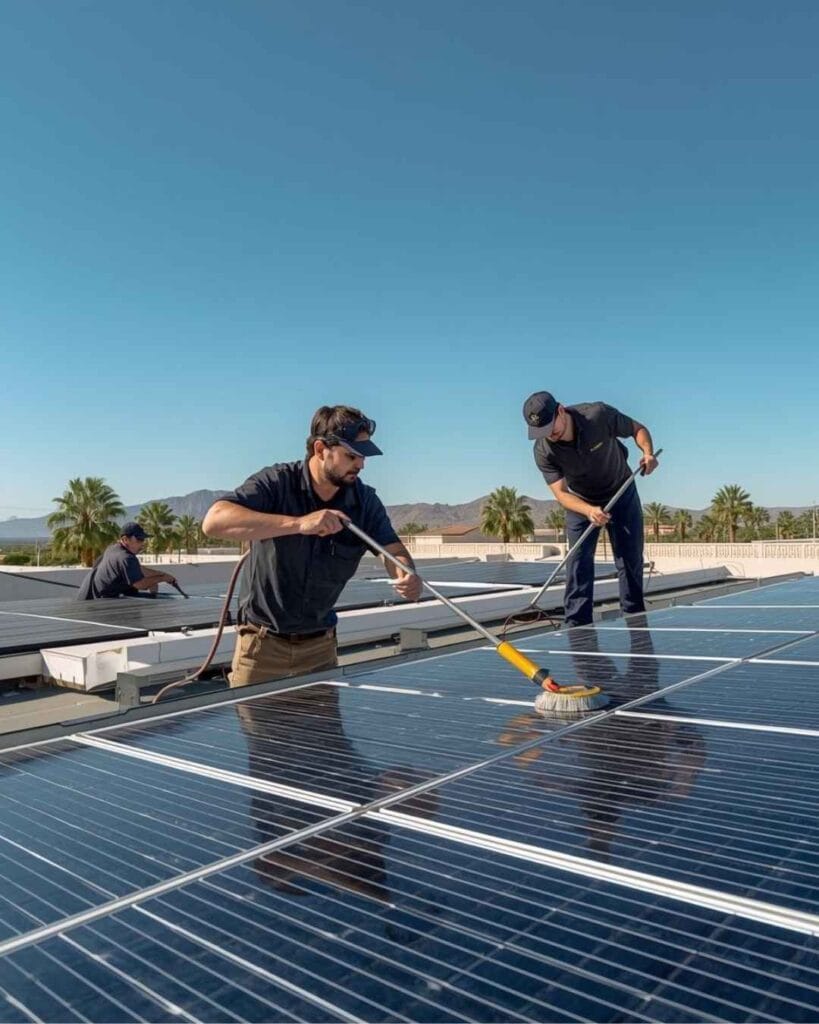
- Schedule professional solar panel cleaning to safely remove waste without damaging seals or coatings
Proactive birdproofing and routine solar maintenance preserve both energy production and property value in arid climates.
Boost Curb Appeal and Solar Efficiency with Pro-Grade Exterior Cleaning
In the Coachella Valley’s intense sun and wind, dust, grime, and bird debris don’t just dull your property’s appearance—they directly impact solar panel performance and building longevity. Professional exterior power washing and window cleaning go beyond aesthetics, serving as essential maintenance steps that enhance both efficiency and property value. When paired with effective bird proofing strategies, these services create a comprehensive defense against common desert threats.
Regular power washing removes built-up dirt from siding, patios, and ground-mounted solar arrays, preventing mold growth and surface degradation caused by prolonged exposure to airborne particulates. Clean surfaces reflect less heat, reducing ambient temperatures around structures and nearby panels—this indirect cooling effect helps maintain optimal photovoltaic performance during peak summer months.
Window cleaning, especially for large glass facades or sun-facing enclosures, improves natural light transmission while eliminating mineral deposits left behind by hard water. In solar applications, this same principle applies: streak-free glass means maximum solar irradiance reaches the cells. Using filtered or deionized water in low-pressure washing techniques prevents etching and spotting, preserving material integrity.
For best results:
- Schedule exterior cleanings quarterly, increasing frequency after sandstorms
- Focus on areas beneath roosting points to prevent corrosive buildup from droppings
- Combine cleaning with bird deterrent inspections to ensure long-term protection
Maintaining pristine exteriors isn’t just about looks—it’s a strategic move to support energy efficiency, extend equipment life, and uphold property standards in harsh desert conditions.
Solar Protection & Maintenance FAQs: Coachella Valley Homeowner Guide
How often should I clean solar panels in the desert climate of Palm Springs and La Quinta?
In arid environments like the Coachella Valley, cleaning every 4 to 6 weeks during peak summer months is ideal. Without regular rainfall, dust, sand, and pollen accumulate rapidly, blocking solar irradiance and reducing efficiency. Ground-mounted or low-tilt systems may require even more frequent cleaning due to limited natural runoff.
Why is bird proofing important for solar installations in desert regions?
Birds often nest beneath panels, especially in warm, sheltered areas common in Palm Springs and surrounding communities. Droppings cause soiling and corrosion, while nesting materials trap heat and debris. Bird proofing—using durable mesh or specialized racking guards—prevents access without affecting airflow or performance.
Can hard water affect my solar panel cleaning results?
Yes. Desert water supplies typically have high mineral content, leading to calcium and magnesium deposits on glass after rinsing. This filmy residue reduces light transmittance and encourages more dirt buildup. For spot-free results, use deionized or filtered water, especially during dry, sunny months.
Is it safe to clean panels myself in extreme heat?
No—cleaning during midday heat poses risks of thermal shock, where cool water on overheated glass (often above 140°F) can cause micro-cracking. Always clean early morning or late evening. Additionally, avoid abrasive tools or high-pressure sprayers that damage anti-reflective coatings.
Do bird deterrents impact solar panel ventilation or warranty?
Properly installed bird proofing maintains air gaps beneath panels and does not void manufacturer warranties. Solutions should be non-invasive, such as stainless steel mesh or custom guards designed for PV systems, ensuring airflow and thermal regulation aren’t compromised.
How can I tell if my system needs immediate cleaning or inspection?
Monitor daily kWh output through your inverter’s app. A steady decline without weather explanation often signals soiling. Also, check for visible shade from debris, bird activity, or mineral streaks. Schedule a professional inspection if you suspect nesting or damage.
Are solar services widely available across the Coachella Valley?
Yes—reliable solar cleaning and bird proofing services operate throughout Palm Springs, La Quinta, Cathedral City, and nearby desert communities. Look for providers experienced with arid conditions and trained in safe, equipment-friendly maintenance techniques.
Long-Term Protection Starts with Integrated Property Care
In the Coachella Valley’s harsh desert climate, maintaining peak solar performance goes beyond simple panel cleaning—it demands a holistic approach that includes birdproofing, window maintenance, and exterior care. Dust, heat, and airborne debris don’t just impact solar arrays; they compromise windows, roofing, and drainage systems, creating interconnected issues that erode both energy efficiency and property value over time. Protecting your investment means addressing these challenges as a unified system, not isolated tasks. Regular solar cleaning prevents soiling losses of up to 15%, while strategic birdproofing stops nesting materials and droppings from damaging panels, wiring, and building façades. Meanwhile, keeping windows and skylights clean ensures optimal natural light transmission, reducing reliance on artificial lighting during peak sun hours.
To sustain long-term benefits:
- Align cleaning schedules across solar, windows, and exterior surfaces to maximize efficiency gains
- Inspect for bird activity during every maintenance cycle, especially near eaves and panel racking
- Use filtered or deionized water on all glass surfaces to prevent hard water spotting common in desert regions
- Trim vegetation to reduce shade on solar arrays and minimize nesting opportunities
This integrated strategy not only boosts energy production but also extends the lifespan of critical building components. By adopting a comprehensive maintenance plan tailored to arid environments, property owners safeguard their systems and enhance overall resilience. For reliable, professional results aligned with desert-specific challenges, consider scheduling routine service to keep every element working in harmony.